Executives highlight opportunities in overseas remittances and inbound tourism payments despite regulatory uncertainty
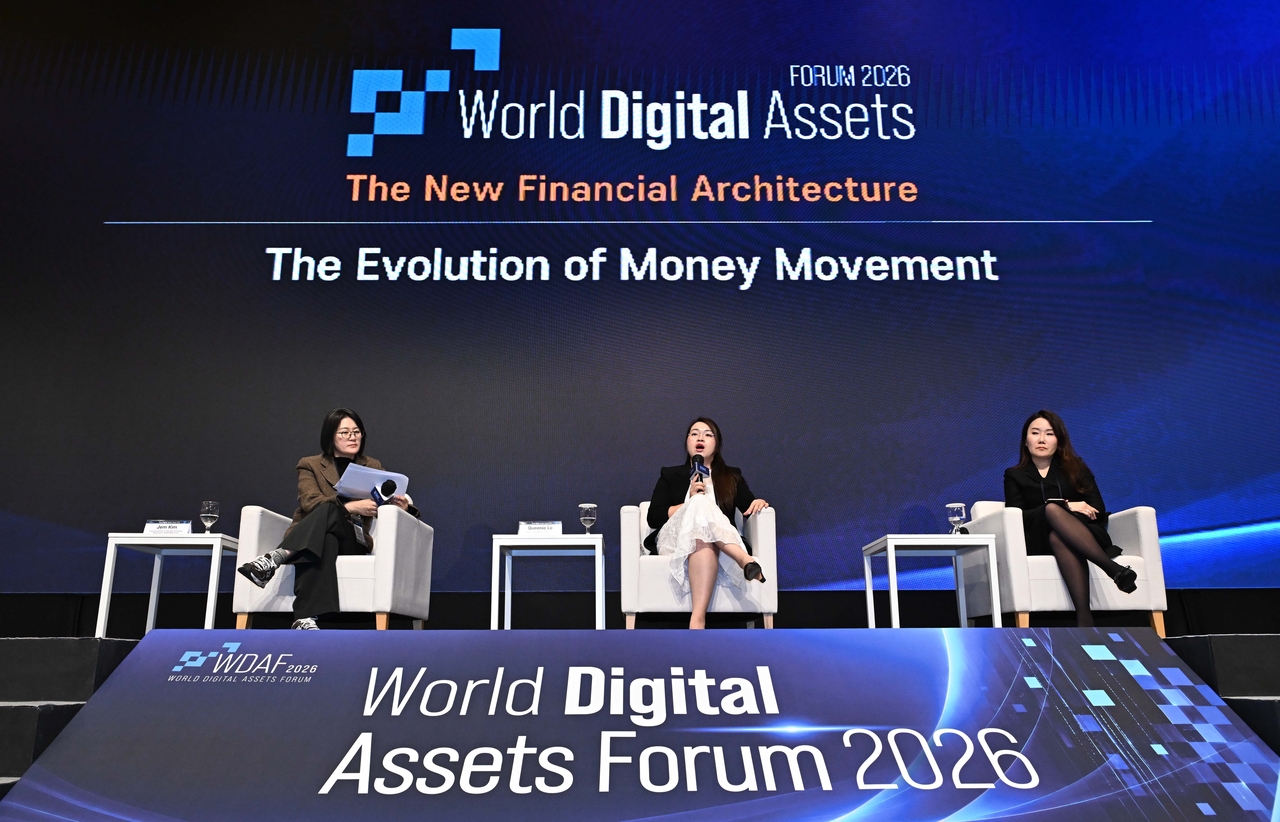
Global stablecoin issuers Tether and Ripple see cross-border payments as a key growth opportunity in South Korea, executives said at the World Digital Assets Forum 2026 in Seoul on Monday.
Queenie Le, Tether's regional expansion lead for Asia-Pacific, and Jinnie Lee, Ripple's Asia-Pacific sales director, shared their views during a panel discussion titled "The Evolution of Money Movement," moderated by Jem Kim, executive director of innovation and strategy at Herald Media Group.
"When you look at Korea and other Asian countries, you don't necessarily need stablecoins to solve domestic payment problems. People can already make transactions easily through the banking system and various local payment options," Le said.
"Stablecoins do not need to come in and compete with those systems. I believe our competitive advantage and the value we can bring to Korea lie in cross-border payments."
Le said Korea is an important market for Tether because Korean companies conduct substantial business with emerging markets, where the stablecoin issuer has established local networks and distribution channels.
Payments by inbound tourists could offer another opportunity, she added, pointing to QR-code payments through Japan's PayPay merchant network as an example of how digital payment systems can facilitate spending by overseas visitors.
"We are seeing many new use cases in this segment across Asia. This is one of the easiest applications to introduce because it involves money coming into the country," Le said.
"I believe similar solutions could be introduced in Korea, subject to regulatory approval."
Meanwhile, Ripple's Lee highlighted the company's partnership with Jeonbuk Bank, a regional lender headquartered in North Jeolla Province. She said Jeonbuk Bank was the first Korean bank to adopt Ripple Payments for cross-border remittances.
"In Korea, however, the regulatory framework for stablecoins has not yet been clearly established. For now, we are facilitating cross-border payments through a US dollar pre-funding model," Lee said.
She also pointed to growing interest among Korean financial institutions in digital assets despite regulatory uncertainty.
"Korean regulations are progressing relatively slowly, but financial institutions are already entering the adoption stage and experimenting with smaller-scale projects," Lee said, citing proof-of-concept projects involving the tokenization of government bonds.
"Although regulatory clarity is still developing, I see growing interest among financial institutions in adopting digital assets."
silverstar@heraldcorp.com